 Passer au contenu







































Énergie solaire : explorez les différents types de panneaux solaires

L'énergie renouvelable, autrefois considérée comme une mode passagère, suscite un intérêt croissant de la part des consommateurs en quête d'indépendance énergétique durable et d'économies à long terme. Alors que de plus en plus de propriétaires, de van-lifers et d'autres amateurs de plein air adoptent l'énergie solaire, ils se demanderont naturellement : « Quels sont les différents types de panneaux solaires, et lequel me convient le mieux ? »
Les panneaux solaires étaient autrefois synonymes d'imitations grossières, lourdes et bon marché de rectangles de verre aux reflets bleus. Aujourd'hui, les systèmes solaires sont très développés et les types de panneaux solaires se sont diversifiés. L'une de ces situations pourrait être l'occasion d'utiliser une technologie différente afin de maximiser votre production d'énergie, que ce soit à votre domicile, le long de la ligne la plus haute du toit d'un camping-car, ou même dans un camping isolé.
Dans ce guide détaillé, nous vous expliquerons les différents types de panneaux solaires ainsi que la technologie qui se cache derrière chacun d'eux, et nous vous aiderons également à déterminer le meilleur type de panneau solaire pour vos besoins énergétiques.
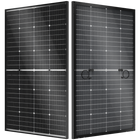
Panneaux solaires bifaciaux rigides : Deux fois plus de puissance
Assurez-vous d'avoir suffisamment d'espace pour une installation fixe, comme un support au sol, une pergola à toit plat ou une galerie de toit robuste ; si votre réponse est « oui », alors les panneaux solaires bifaciaux rigides sont une solution révolutionnaire pour vous.
Qu'est-ce que la technologie bifaciale ?
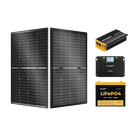
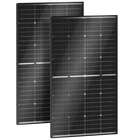
Certains panneaux solaires sont monofaciaux, ce qui signifie qu'ils ne captent la lumière que sur la face avant. Mais les panneaux solaires bifaciaux sont conçus avec du verre des deux côtés, ce qui leur permet de capter la lumière du soleil de l'avant et la lumière réfléchie de l'arrière.
L'effet Albedo
Les performances des panneaux bifaciaux dépendent principalement des caractéristiques de la surface du sol située sous le panneau. Les panneaux permettent la capture de la lumière arrière lorsqu'ils sont installés au-dessus de surfaces qui réfléchissent la lumière, telles que le gravier blanc, les matériaux de toiture de couleur claire et la neige. Le système peut produire 25 % à 30 % plus d'énergie qu'un panneau standard de dimensions identiques.

Durabilité et longévité
Les panneaux bifaciaux sont généralement construits avec du verre trempé des deux côtés, ce qui les rend incroyablement durables face aux intempéries, au vent et à la dégradation due aux UV. Ils constituent le choix idéal pour les installations « installez et oubliez » où l'efficacité maximale est l'objectif principal.
Panneaux solaires flexibles en fibre de verre : légers et robustes
Pour de nombreux utilisateurs, le choix se fait entre la « légèreté » d'un panneau flexible et la « durabilité » d'un panneau rigide. Les panneaux solaires flexibles en fibre de verre ont été conçus pour combler cet écart.
L'avantage de la fibre de verre
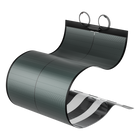
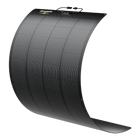
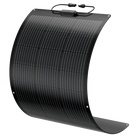
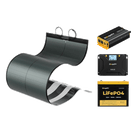
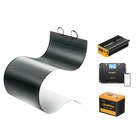
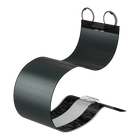
Les panneaux flexibles standard utilisent souvent des films plastiques (comme le PET) qui peuvent se dégrader avec le temps sous l'effet d'un ensoleillement intense. Les panneaux solaires en fibre de verre, comme la série Arch de BougeRV, utilisent un support et une couche supérieure en fibre de verre haute résistance. Ce matériau est incroyablement résistant et résistant à la chaleur, et offre une meilleure protection pour les cellules solaires à l'intérieur.
Principaux avantages
☆ Conception légère : Cette caractéristique les distingue des anciens panneaux de verre lourds, permettant un placement avec seulement de l'adhésif ou du ruban VHB, en plus de ne pas contribuer beaucoup au poids total du véhicule.
☆ Surfaces praticables : Grâce au renforcement en fibre de verre, la majorité de ces panneaux sont conçus pour être « praticables », devenant ainsi le choix préféré des propriétaires de bateaux qui doivent monter des panneaux sur des ponts soumis au passage.
☆ Dissipation de la chaleur : Par rapport aux plastiques standard, la fibre de verre est plus résistante à la chaleur, ce qui signifie que le panneau peut fonctionner sans perte d'efficacité même pendant les étés les plus chauds.
☆ Flexibilité : En fait, la limite de pliage de certains panneaux sophistiqués, tels que les panneaux Arch, peut atteindre 270 degrés.
☞ Vous pourriez demander : Est-il anti-ombrage ?
Si vous souhaitez que votre panneau solaire flexible en fibre de verre soit tolérant à l'ombre, vous pouvez choisir le modèle de panneau solaire flexible BougeRV Arch Pro.

Panneaux solaires flexibles CIGS : L'avenir de la polyvalence
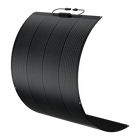
L'une des avancées les plus significatives de la technologie solaire est le développement des panneaux solaires flexibles CIGS. CIGS signifie Cuivre Indium Gallium Séléniure. Contrairement aux panneaux traditionnels à base de silicium, le CIGS est une technologie à couche mince qui offre un niveau de flexibilité et de durabilité auparavant impossible.
Comment fonctionne la technologie CIGS
Les panneaux CIGS sont créés en déposant une fine couche de cuivre, d'indium, de gallium et de séléniure sur un support. Il en résulte un panneau nettement plus fin et plus léger que les panneaux rigides traditionnels.
Pourquoi choisir le CIGS ?
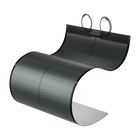
☆ Flexibilité à 360 degrés : Comme ils n'ont pas les plaquettes de silicium fragiles des panneaux traditionnels, les panneaux solaires flexibles CIGS peuvent être façonnés pour s'adapter à une surface arrondie, telle que le toit d'un camping-car, le pont d'un bateau ou même une remorque en forme de goutte d'eau.

☆ Excellentes performances en basse lumière : La technologie CIGS est très sensible à un large spectre de lumière. C'est pourquoi ils peuvent produire de l'énergie dès les premières lueurs du jour et continuer à le faire jusqu'à la nuit, presque comme les panneaux rigides.
☆ Tolérance à l'ombre : Habituellement, les panneaux traditionnels peuvent s'arrêter complètement si même une petite partie du panneau est ombragée. Mais les panneaux CIGS sont équipés d'un dispositif de diode de dérivation, ce qui leur permet de générer de l'électricité même lorsqu'ils sont partiellement bloqués par un obstacle tel qu'une branche d'arbre ou une galerie de toit.
Pour ceux qui privilégient l'aérodynamisme et l'esthétique de leurs véhicules, le CIGS est souvent considéré comme le meilleur type de panneau solaire pour les applications mobiles.
Panneaux solaires portables : l'énergie en mouvement
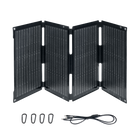
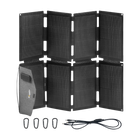
Toutes les installations solaires n'ont pas besoin d'être permanentes. Pour les campeurs, les randonneurs et les personnes vivant en appartement qui souhaitent une alimentation de secours, les panneaux solaires portables offrent une commodité ultime.
La technologie derrière la portabilité
Les panneaux solaires portables sont généralement conçus pour se plier comme une valise. Ils utilisent souvent des cellules monocristallines à haut rendement pour une grande efficacité. Ces panneaux utilisent souvent un support en tissu pliable ou en polymère.
Pourquoi choisir le portable ?
☆ Plug-and-Play : La plupart du temps, ces panneaux comprennent des supports intégrés et de nombreux connecteurs (tels que MC4 ou sorties CC), de sorte qu'ils sont facilement associés à des stations d'alimentation portables.
☆ Suivez le soleil : Les panneaux de toit fixes sont stationnaires, mais avec un panneau portable, vous pouvez le déplacer dans la direction du soleil tout au long de la journée ; ainsi, il sera la plupart du temps à angle droit par rapport au soleil, ce qui se traduira par une charge plus rapide.
☆ Stockage : Une fois pliés, ils deviennent de petite taille, ce qui convient pour les ranger dans un tiroir de lit ou un coffre de voiture.

Comparaison des différents types de panneaux solaires
Lorsque vous évaluez le meilleur type de panneau solaire, vous devez vous concentrer sur certaines spécifications particulières. Les données suivantes utilisent les panneaux BougeRV comme exemples :
|
Caractéristiques |
Rigide bifacial |
Flexible en fibre de verre |
Flexible CIGS |
Portable/Pliable |
|
Efficacité |
25 % |
Arc 23 % Arc Pro 25 % |
17 % |
25 % |
|
Flexibilité |
Aucune |
Modérée (270°) |
Extrême (360°) |
Pliable |
|
Anti-ombrage |
Non |
Seulement Arch Pro |
Oui |
Non |
|
Robustesse |
Faible |
Élevée |
Élevée |
Élevée |
Conclusion
L'énergie solaire mondiale n'est plus une affaire de centrales électriques monolithiques. Connaître les différents types de panneaux solaires permet de construire le système parfait qui vous convient le mieux.
SunPower va au-delà d'être une simple entreprise de matériel ; à la base, il s'agit d'investir dans la bonne technologie pour alimenter vos aventures et votre maison pour les générations futures. Découvrez les types de panneaux solaires BougeRV, calculez votre surface de montage et commencez à utiliser la puissance illimitée de l'eau dès aujourd'hui.
FAQ
Q1 : Les panneaux solaires portables peuvent-ils recharger une station d'alimentation ou une batterie ?
R : Oui. La plupart des panneaux portables sont équipés de sorties CC ou MC4 destinées à charger des stations d'alimentation portables. Adaptez toujours la tension/puissance du panneau et la compatibilité du contrôleur au système de batterie.
Q2 : Quel est le type de panneau solaire le plus efficace ?
R : Actuellement, les panneaux bifaciaux sont les seuls à pouvoir atteindre le plus haut niveau d'efficacité. D'autre part, leur niveau d'efficacité en pratique est affecté par divers facteurs tels que la manière dont ils sont installés, l'ombrage et la disponibilité de la lumière du soleil.
Q3 : Les panneaux solaires perdent-ils de leur efficacité avec le temps ?
R : Oui. Comme toute technologie, les panneaux solaires dégradent également leur niveau de performance progressivement au fil des ans. Par exemple, les panneaux solaires BougeRV ne devraient perdre qu'environ 0,5 % à 1 % de leur efficacité par an. Ainsi, après 20 à 25 ans, ils peuvent encore produire 80 à 90 % de la puissance dont ils étaient capables au début.


