 Passer au contenu










































Meilleure installation solaire pour le camping en SUV : guide complet de l'autonomie énergétique

Il n'y a rien de tel que la liberté du camping en SUV : des routes infinies, des destinations éloignées et une indépendance totale par rapport au réseau électrique. Mais cette liberté s'accompagne d'un défi : maintenir votre alimentation électrique stable lorsque vous êtes à des kilomètres de la civilisation.
Tous les panneaux solaires ne sont pas égaux, surtout lorsque vous les montez sur un SUV. Le meilleur panneau solaire pour le camping n'est pas nécessairement le plus puissant, c'est celui qui correspond à votre style d'aventure spécifique, aux contraintes de votre véhicule et à vos besoins en énergie.
Dans ce guide, nous vous présenterons tout ce que vous devez savoir pour construire la meilleure installation solaire pour le camping en SUV, y compris des solutions éprouvées que des milliers de campeurs utilisent déjà.
Pourquoi les campeurs en SUV ont besoin de panneaux solaires
Le camping traditionnel, qui repose sur l'alternateur de votre véhicule ou un générateur portable, crée de réelles limitations. Votre moteur consomme du carburant lors du chargement des batteries. Les générateurs sont bruyants, gourmands en carburant et pas particulièrement écologiques. Aucune de ces options ne vous procure la tranquillité d'esprit qu'apporte une véritable indépendance énergétique.
Les panneaux solaires changent la donne. Tant que le soleil brille, vous produisez de l'énergie. Il n'y a pas de consommation de carburant, pas de bruit et aucune culpabilité quant à votre impact environnemental. La vraie question n'est pas de savoir si vous avez besoin de solaire, mais quelle installation solaire fonctionnera réellement pour votre véhicule et votre style de camping.
Comprendre les types de panneaux solaires pour le camping en SUV
Lorsque vous recherchez le meilleur panneau solaire pour les applications de camping, vous rencontrerez trois types principaux : les panneaux flexibles à couches minces CIGS, les panneaux flexibles de type N et les panneaux rigides de type N haut de gamme. Chacun présente des avantages distincts pour différents scénarios de camping.
Panneaux solaires flexibles : légers et peu encombrants
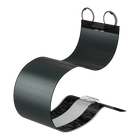
Les panneaux solaires flexibles ont révolutionné le camping en fourgonnette et en SUV, car ils résolvent le problème du montage. Contrairement aux panneaux rigides qui nécessitent un renforcement important du toit, les panneaux flexibles ne pèsent que 2 à 3 livres et peuvent être collés directement sur le toit de votre SUV à l'aide d'un adhésif marin.
Pour les campeurs en SUV disposant d'un espace de toit limité, les panneaux flexibles offrent un profil de 1,5 pouce qui minimise la résistance au vent et ne dépasse pas de manière gênante. Ils sont également plus tolérants si vous marchez accidentellement dessus.
L'inconvénient ? Les panneaux flexibles sont généralement 2 à 4 % moins efficaces que les panneaux monocristallins rigides de même puissance. Pour la plupart des campeurs en SUV, cette légère perte d'efficacité vaut la simplicité d'installation.
Panneaux solaires rigides : efficacité et durabilité maximales
Les panneaux monocristallins rigides offrent une efficacité et une durabilité supérieures. Ils sont idéaux si vous avez de l'espace sur le toit et que la complexité de l'installation ne vous dérange pas. Les panneaux rigides maintiennent un rendement constant sur différentes orientations angulaires, ce qui les rend excellents pour les installations semi-permanentes.
Panneaux de type N avec ShadePower : la dernière technologie
Les panneaux solaires de type N représentent la dernière avancée en matière de technologie de panneau. Ces panneaux utilisent des cellules de silicium de type N (électrons comme porteurs de charge) au lieu du type P traditionnel (trous comme porteurs de charge). Le résultat ? Une meilleure efficacité, une dégradation réduite induite par la lumière et des performances supérieures dans diverses conditions d'éclairage.
Combinés à la technologie ShadePower — un système avancé de diodes de dérivation — les panneaux de type N deviennent exceptionnellement performants dans les environnements partiellement ombragés. ShadePower permet à l'électricité de circuler autour des cellules bloquées, maintenant le rendement même lorsque 33 % de la surface du panneau est obstruée (que ce soit par des feuilles, des évents de toit ou des branches d'arbre).
Pour les campeurs en SUV campant dans les forêts, les canyons ou partout où l'ombrage est inévitable, cette combinaison d'efficacité de type N et de capacité ShadePower offre des résultats nettement meilleurs que les alternatives conventionnelles.
Calculer vos besoins solaires
Avant de chercher la meilleure installation de panneaux solaires, déterminez vos besoins réels en énergie. Suivez votre consommation électrique typique :
- Systèmes de refroidissement/chauffage : 1 000-2 000 W par heure
- Chargement d'ordinateur portable et d'appareils : 300-500 W par jour
- Réfrigérateur : 300-500 W par jour
- Éclairage et ventilateurs : 100-300 W par jour
La plupart des campeurs en SUV qui font du camping sauvage confortablement nécessitent 400 à 800 watts-heures par jour. D'autres, utilisant des installations plus exigeantes (avec climatisation ou chauffe-eau), ont besoin de plus de 2 000 watts-heures. Un système de panneaux solaires de 200 watts générant 4 à 5 heures d'ensoleillement maximal par jour produit 800 à 1 000 watts-heures. Cela suffit pour de nombreux campeurs. Les campeurs à temps plein sérieux bénéficient généralement de plus de 400 watts.
Les meilleures solutions de panneaux solaires pour le camping en SUV
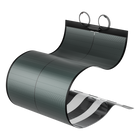
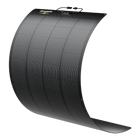
Panneau solaire flexible BougeRV ARCH PRO 12V/24V 200W

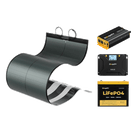
Le panneau solaire flexible ARCH PRO 12V/24V 200W combine le meilleur des deux mondes : la technologie avancée N-type TOPCon avec la capacité ShadePower, le tout dans un ensemble léger ne pesant que 7,9 livres.
Ce panneau offre une efficacité de conversion de 25 % grâce à la technologie 16BB (multi-busbar) pour réduire les pertes d'énergie. Ce qui le rend exceptionnel, c'est la technologie ShadePower, conçue pour maintenir une puissance de sortie allant jusqu'à 130 W même lorsque 33 % de la surface du panneau est obstruée. Parfait pour le camping en SUV où vous avez affaire à des évents de toit, des antennes ou de l'ombre d'arbres.
La conception flexible à 270° et le système de montage adhésif signifient que l'installation prend un après-midi sans renforcement du toit. Il est compatible avec les systèmes 12V et 24V, ce qui simplifie l'intégration. Le panneau peut se plier jusqu'à 270°, permettant une installation transparente sur les toits de SUV incurvés.
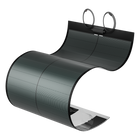
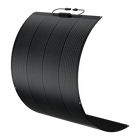
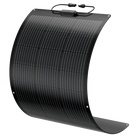
Panneau solaire flexible BougeRV CIGS 200W (Yuma)

Le panneau solaire flexible BougeRV CIGS 200W représente une philosophie différente : privilégier la flexibilité ultra-mince et les performances en faible luminosité plutôt que l'efficacité maximale.
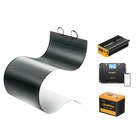
Utilisant la technologie de pointe à couches minces CIGS, ce panneau de 8,44 livres est incroyablement flexible (pliable à 360°) et ultra-mince (seulement 0,08 pouce). Les CIGS affichent généralement un rendement d'environ 17 %, inférieur aux 25 % du type N. Mais dans des conditions de camping réelles avec une lumière variable, de l'ombre et un ciel nuageux, la technologie CIGS offre des performances remarquablement bonnes.
Le panneau résiste à la marche, aux chocs et intègre plusieurs diodes de dérivation pour la tolérance à l'ombre. L'installation est sans perçage grâce à un adhésif de qualité industrielle, et la flexibilité à 360° permet un montage parfait sur les toits de VR incurvés, les auvents de bateaux et les surfaces irrégulières.
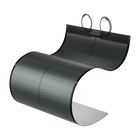
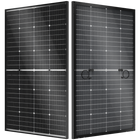
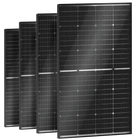
Panneau solaire rigide BougeRV 200W N-Type Shade Power

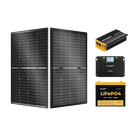
Pour les campeurs en SUV qui privilégient une efficacité maximale et des performances exceptionnelles à l'ombre, le panneau solaire rigide 200W N-Type ShadePower est le choix haut de gamme. Ce panneau rigide offre une efficacité de 25 % avec une technologie anti-ombrage avancée conçue pour maintenir plus de 85 % de la puissance même en cas d'ombrage partiel.
À 23,4 livres, il est plus lourd que les alternatives flexibles, mais la construction rigide offre une durabilité supérieure et une meilleure gestion thermique. La technologie ShadePower comprend 24 diodes de dérivation qui empêchent les points chauds et maintiennent le flux de puissance autour des cellules obstruées, ce qui est crucial si vous êtes garé sous des arbres ou près de structures.
Le coefficient de température de -0,32 %/°C signifie de meilleures performances en cas de chaleur extrême. Avec une garantie de puissance linéaire de 30 ans et une garantie sur les matériaux de 10 ans, ce panneau est conçu pour une fiabilité à long terme.
Comparaison rapide : quel panneau BougeRV vous convient le mieux ?
|
Caractéristique |
ARCH PRO 200W |
CIGS 200W Yuma |
Rigide 200W |
|
Type de panneau |
N-Type Flexible |
CIGS à couche mince flexible |
N-Type Rigide |
|
Efficacité maximale |
25% |
17% |
25% |
|
Technologie |
ShadePower + TOPCon |
CIGS à couche mince |
ShadePower + TOPCon |
|
Performance à l'ombre |
130W @ 33% d'ombre |
Diodes de dérivation multiples |
85%+ de rendement à l'ombre |
|
Poids |
7,9 lb |
8,44 lb |
23,4 lb |
|
Épaisseur |
Standard |
Ultra-mince (0,08 po) |
~1,2 pouces |
|
Flexibilité |
Pliage à 270° |
Pliage à 360° |
Rigide (fixe) |
|
Installation |
Montage adhésif |
Adhésif sans perçage |
Supports boulonnés |
|
Difficulté d'installation |
⭐ Très facile |
⭐ Très facile |
⭐⭐⭐ Modéré |
|
Idéal pour |
Ombragé + N-type |
Nuages + flexibilité |
Permanent + ombre |
|
Garantie (Matériel) |
5 ans |
10 ans |
10 ans |
Guide de décision rapide :
- Camping dans des régions nuageuses ou côtières ? → Le CIGS Yuma excelle dans des conditions de faible luminosité
- Vous avez affaire à l'ombre des arbres ou à des obstacles sur le toit ? → L'ARCH PRO équilibre les performances à l'ombre avec une efficacité légère
- Ombre partielle fréquente et vous voulez un N-type haut de gamme ? → L'ARCH PRO est votre meilleure option
- Vous mettez en place une installation semi-permanente ? → Le ShadePower Rigide offre une durabilité maximale et une tolérance à l'ombre
- Vous voulez une flexibilité maximale absolue pour les surfaces courbes ? → La flexibilité à 360° du CIGS Yuma est inégalée
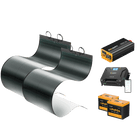
Construire votre installation solaire complète
Un panneau solaire seul ne constitue pas un système complet. Vous aurez également besoin de :
- Contrôleur de charge : Régule le flux d'énergie des panneaux vers les batteries (les contrôleurs MPPT de 60 à 100 ampères sont standard pour les systèmes de SUV)
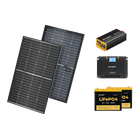
- Banque de batteries : Les batteries au lithium LiFePO₄ sont idéales (plus légères, plus durables), mais les batteries au plomb-acide fonctionnent si le budget est serré
- Onduleur : Convertit l'énergie DC en AC pour les appareils standard (1 000-2 000 W est typique)
- Câblage et disjoncteurs : Composants essentiels à la sécurité (ne lésinez jamais là-dessus)
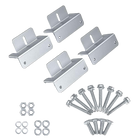
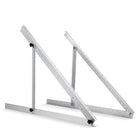
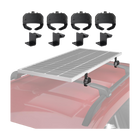
- Matériel de montage : Un adhésif, des supports et du matériel de qualité garantissent la longévité
BougeRV propose des collections complètes de panneaux solaires avec l'équipement de support, simplifiant le processus de coordination.
Considérations d'installation
Espace sur le toit : La plupart des SUV peuvent accueillir confortablement 200 à 400 watts. Les installations plus importantes nécessitent un montage créatif.
Poids : Les panneaux flexibles (11-15 lb chacun) sont plus légers pour la structure du véhicule. Les panneaux rigides (plus de 40 lb) nécessitent une évaluation du renforcement du toit.
Angle de montage : Idéalement, les panneaux devraient faire face au sud (hémisphère nord) à un angle correspondant à votre latitude. Les toits de SUV ne sont pas parfaits, mais même une installation imparfaite orientée vers le sud est meilleure qu'une installation orientée vers l'est ou l'ouest.
Poussière et débris : Prévoyez des routines de nettoyage. Les panneaux sales perdent 15 à 25 % d'efficacité.
Conclusion
Le camping en SUV représente le summum de la liberté de voyager, et l'énergie solaire amplifie cette liberté de façon exponentielle. La meilleure configuration de panneaux solaires équilibre vos besoins spécifiques en énergie, les contraintes de votre véhicule et votre budget. Il ne s'agit pas de rechercher la puissance maximale, mais plutôt une production d'énergie fiable, silencieuse et indépendante qui vous permet de camper plus longtemps, plus loin et en toute tranquillité d'esprit. Votre prochaine aventure vous attend. L'énergie solaire ne fait que l'améliorer.


