 Passer au contenu










































Glacière à compresseur ou réfrigérateur portable : lequel est le plus économique à long terme ?

Choisir entre une glacière traditionnelle et un réfrigérateur portable est un dilemme courant pour les campeurs, les voyageurs en voiture, les adeptes de l'overlanding et les aventuriers du week-end. Le débat glacière vs réfrigérateur est souvent centré sur le prix d'achat initial par rapport aux dépenses courantes, à la commodité et à la fiabilité. Bien qu'une glacière à glace semble moins chère au départ, des coûts cachés tels que les achats répétés de glace, le gaspillage alimentaire et le temps passé à réapprovisionner peuvent s'accumuler rapidement. Un réfrigérateur portable (ou glacière électrique) nécessite un investissement initial plus élevé, mais peut offrir des économies significatives et une tranquillité d'esprit sur des mois ou des années d'utilisation.
Dans ce guide, nous comparerons une glacière à un réfrigérateur sous tous les angles pratiques, y compris le coût initial, les coûts d'exploitation, la conservation des aliments, la commodité et la valeur à long terme. Que vous planifiiez des voyages de camping occasionnels le week-end ou que vous passiez des mois sur la route, cet article vous aidera à déterminer quelle solution de refroidissement représente l'investissement financier le plus judicieux.
Glacière à glace vs réfrigérateur portable : Comprendre la véritable différence
Une glacière traditionnelle dépend entièrement de la glace pour absorber la chaleur. Dès que la glace commence à fondre, la température interne commence à augmenter. Chaque fois que vous ouvrez le couvercle pour prendre une boisson ou préparer un repas, de l'air chaud pénètre dans la glacière et accélère le processus de fonte. Pendant les voyages de camping estivaux, de nombreuses glacières nécessitent de la glace fraîche tous les un ou deux jours juste pour maintenir des températures de stockage des aliments sûres. En plus d'occuper un espace de stockage précieux, la glace fondante crée de l'eau qui laisse souvent les emballages alimentaires humides ou endommagés, rendant l'organisation de plus en plus difficile au fur et à mesure du voyage.
Un réfrigérateur portable fonctionne très différemment. Au lieu de compter sur la glace fondante, il utilise un système de compresseur similaire au réfrigérateur de votre cuisine. Une fois que vous avez réglé la température souhaitée, le compresseur s'active et se désactive automatiquement pour maintenir cette température quelles que soient les conditions météorologiques extérieures. Qu'il fasse 35 °C dans le désert ou un après-midi humide à la plage, le réfrigérateur continue de garder les aliments constamment froids, et de nombreux modèles peuvent même congeler de la viande, de la crème glacée ou des repas surgelés.
Cette distinction explique pourquoi tant d'amateurs de plein air expérimentés passent finalement d'une glacière à glace à un réfrigérateur portable.
Coûts initiaux : La glacière à glace remporte la bataille initiale
Les glacières traditionnelles varient de 20 à 50 $ pour les modèles de base à 150 à 400 $ et plus pour les options rotomoulées haut de gamme comme les unités de type Yeti. Elles n'ont pas de besoins en énergie continue, ce qui les rend attrayantes pour les utilisateurs occasionnels.
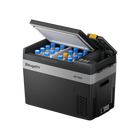
Les réfrigérateurs portables commencent plus haut, souvent de 200 à 600 $, selon la capacité et les fonctionnalités. Des modèles de compresseurs économiques sont disponibles pour environ 230 $, tandis que les options avec deux zones, des roues ou des batteries intégrées coûtent plus cher. Par exemple, BougeRV propose des solutions 12 V fiables adaptées à une utilisation en extérieur.
Malgré le prix d'achat plus élevé, l'investissement dans un réfrigérateur portable est souvent rentabilisé plus rapidement que prévu pour les utilisateurs réguliers.
Coûts permanents : La taxe sur la glace s'accumule rapidement
C'est là que la comparaison des économies entre glacière et réfrigérateur devient intéressante. La glace n'est pas bon marché, surtout sur une saison.
-
Un voyage typique de week-end pourrait nécessiter 1 à 2 sacs de glace par jour à 3 à 10 $ le sac (selon l'emplacement et la taille).
-
Pour 10 à 15 voyages par an, cela représente 80 à 150 $ et plus rien qu'en glace, sans compter l'essence pour les courses ou les aliments gâtés.
-
Les utilisateurs à temps plein ou fréquents déclarent dépenser plus de 500 $ par an en glace, en plus du temps et des tracas.
Les réfrigérateurs portables ont de faibles coûts d'électricité, souvent de 5 à 15 $ par saison lorsqu'ils sont alimentés par votre véhicule ou l'énergie solaire. Les modèles 12 V efficaces consomment environ 40 à 60 W en fonctionnement, mais s'allument et s'éteignent par intermittence, consommant beaucoup moins en moyenne. Au fil des ans, cela a fait de la glacière électrique vs glacière à glace un choix évident pour les économies de coûts.
Les utilisateurs se plaignent fréquemment de la glace fondue qui abîme les provisions ou les boissons. Un réfrigérateur portable évite ce désordre et réduit le gaspillage alimentaire, ajoutant des économies indirectes.
Performance et commodité : Facteurs de valeur à long terme
Le contrôle de la température est un problème majeur pour les glacières à glace. À mesure que la glace fond, les températures internes augmentent, augmentant les risques pour la sécurité alimentaire (garder les denrées périssables en dessous de 4 °C). Dans les climats chauds ou les longs voyages, la glace ne dure que 24 à 72 heures.
Les réfrigérateurs portables offrent des commandes numériques, souvent avec une capacité de congélation allant jusqu'à -20 °C ou moins. Ils maintiennent des températures constantes quelles que soient les conditions de chaleur externes, permettant des voyages plus longs sans réapprovisionnement. Fini les sandwichs détrempés ou la bière chaude.
Le poids et l'espace sont d'autres préoccupations. Une glacière remplie de glace devient rapidement lourde (la glace ajoute 4,5 à 9 kg et plus), et une grande partie du volume est occupée par la glace. Un réfrigérateur portable offre un espace utilisable complet et peut être globalement plus léger lors de longs voyages, car aucune glace n'est nécessaire.
La dépendance à l'alimentation électrique est une préoccupation valable pour les zones reculées, mais le couplage avec un alternateur de véhicule, une station d'alimentation ou une installation solaire atténue ce problème. De nombreuses unités modernes incluent une protection basse tension pour protéger votre batterie.
Calculs d'économies réelles
Examinons des scénarios basés sur une utilisation typique :
-
Campeur occasionnel (5 à 8 voyages/an) : Une glacière à glace pourrait coûter moins cher globalement la première année. Dépenses de glace : ~50 à 100 $. Restez avec une bonne glacière isolée.
-
Guerrier du week-end (15+ voyages/an) : Les coûts de glace grimpent à 150 à 300 $ et plus. Un réfrigérateur portable de 300 à 500 $ est amorti en 1 à 3 ans grâce aux seules économies de glace, en plus de la réduction des déchets et de la commodité.
-
Utilisateur fréquent ou à temps plein : Les économies s'accélèrent considérablement, potentiellement 500 à 700 $ et plus par an. Amortissement en moins de 12 à 18 mois.
Ces chiffres concordent avec les rapports d'utilisateurs et les calculatrices montrant que les coûts d'exploitation des réfrigérateurs sont minimes par rapport aux achats de glace récurrents.
Les avantages supplémentaires incluent une meilleure organisation, la possibilité de congeler des articles et des fonctionnalités telles que le contrôle par application ou les roues sur les modèles haut de gamme.
Choisir le bon réfrigérateur portable pour vos aventures
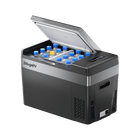
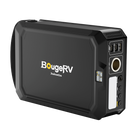
Pour ceux qui penchent vers un réfrigérateur portable, les modèles 12V de qualité de marques fiables offrent d'excellentes performances. BougeRV se spécialise dans les options durables et efficaces, parfaites pour les véhicules, le camping et les aventures hors réseau.
Découvrez la collection complète de réfrigérateurs 12V ici. Ces unités à compresseur sont conçues pour un refroidissement fiable sur la route.

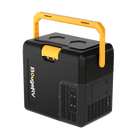
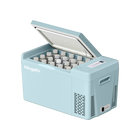
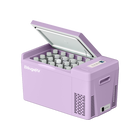
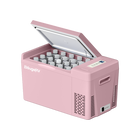
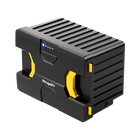
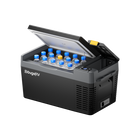
Pour les campeurs qui privilégient la portabilité, le nouveau réfrigérateur de voiture portable 12 V CRH20 avec batterie est une excellente option. Sa capacité compacte de 20 L et sa batterie amovible permettent un véritable fonctionnement sans fil, ce qui facilite le transport de votre véhicule à une tente, une plage, un lieu de pêche ou un pique-nique sans sacrifier les performances de refroidissement.

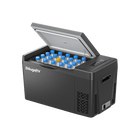
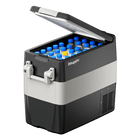
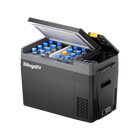
Si vous avez besoin de plus de stockage pour le camping du week-end ou les voyages en voiture en famille, la nouvelle glacière électrique CRX3 avec batterie offre une plus grande capacité tout en restant légère et économe en énergie. Sa compatibilité de batterie intégrée vous permet de garder les aliments et les boissons au frais même après avoir quitté votre véhicule, ce qui offre un excellent équilibre entre portabilité, autonomie et commodité au quotidien.

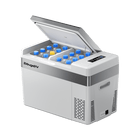
Pour les voyageurs tout-terrain, les propriétaires de camping-cars et les voyageurs qui ont besoin d'une flexibilité maximale, le nouveau réfrigérateur de voiture double zone Rocky V3.0 est le choix haut de gamme. Sa conception double zone vous permet de réfrigérer et de congeler des aliments en même temps, éliminant ainsi le besoin de glacières séparées. Combiné à sa construction robuste, sa plus grande capacité et son fonctionnement sur batterie, il est conçu pour les aventures prolongées hors réseau où une réfrigération fiable est primordiale.
Considérations environnementales et pratiques
La production et le transport de glace ont une empreinte environnementale, en plus des déchets de sacs en plastique. Les réfrigérateurs portables, surtout lorsqu'ils sont alimentés par l'énergie solaire, sont plus durables à long terme. Ils réduisent également l'utilisation de plastique à usage unique provenant des sacs de glace.
L'entretien est minimal pour les deux, mais les réfrigérateurs bénéficient d'un nettoyage occasionnel et d'une bonne ventilation. Les utilisateurs préoccupés par les pannes de courant peuvent les utiliser comme glacières haute performance avec des blocs de glace en cas de besoin.
Qui devrait choisir quoi ?
-
Choisissez une glacière à glace si vous campez rarement, privilégiez la simplicité et l'absence de besoins en électricité, ou si vous avez des budgets très serrés pour des excursions d'une journée occasionnelles.
-
Choisissez un réfrigérateur portable si vous valorisez la commodité, faites de plus longs voyages, détestez les courses de glace ou souhaitez une sécurité alimentaire constante. Les économies d'argent à long terme et la réduction des tracas en valent la peine pour la plupart des utilisateurs actifs.
Conclusion : Le gagnant à long terme
Dans le duel glacière contre réfrigérateur, le réfrigérateur portable permet souvent d'économiser plus d'argent à long terme pour quiconque l'utilise régulièrement. Bien que le coût initial soit plus élevé, l'élimination des dépenses liées à la glace, la minimisation des déchets et la fiabilité font pencher la balance. Calculez votre propre utilisation : la plupart des aventuriers du week-end voient un retour sur investissement en quelques saisons.
Si vous êtes prêt à passer à la vitesse supérieure, parcourez la gamme de réfrigérateurs portables 12 V efficaces de BougeRV pour trouver celui qui convient le mieux à vos aventures. Qu'il s'agisse d'un modèle compact avec batterie ou d'un réfrigérateur de voiture complet, investir dans le refroidissement actif rapporte des dividendes en termes d'économies, de commodité et de plaisir. Utilisez le code de réduction limité "SEOBF" à la caisse pour bénéficier d'une remise supplémentaire de 6 %.


