 Skip to content





































Do Mini Fridges Use a Lot of Electricity?

Mini fridges are everywhere, from dorm rooms, to office corners, studio apartments, campers, and tiny homes. If you’re considering buying one or already own one and are worried about unexpected electricity costs, you’ve probably wondered: Do mini fridges use a lot of electricity?
The short answer: not usually. But the full answer depends on factors like the fridge model, how it’s used, and where it’s located. Let's find out how mini fridge electricity consumption works, how to calculate running costs, real-world examples, and practical tips to reduce energy use. We’ll also breakdown why 12V electric camper fridges can be an exceptionally efficient choice for off-grid living.
How Do Refrigerators Use Electricity
Mini fridges rely on one of three main cooling technologies, each with its own energy efficiency profile:
-
Compressor (DC or AC): The most efficient option. Compressors run in cycles, turning on and off as needed. They draw modest power while running and maintain temperature even in high ambient heat.
-
Thermoelectric (Peltier): A simpler but less efficient option. These fridges have a steady, low power draw but can struggle in warmer conditions, leading to longer runtimes. They’re less effective at maintaining freezing temperatures.
-
Absorption (Gas/AC): Rare for small fridges today, these are used in situations where quiet operation or no compressor is required. Efficiency varies greatly.
For camper and RV use, 12V compressor fridges are the gold standard. They’re specifically designed for low power draw and continuous operation with batteries or solar power. These models typically deliver the best energy performance per liter of storage, making them ideal for mobile lifestyles.
Typical Electricity Consumption Ranges for Mini Fridges
Electricity usage varies widely depending on the type, size, and efficiency of the mini fridge. Here are some typical ranges to help set expectations:
-
Highly efficient compressor mini fridges (small, well-insulated, in a cool room): ~8–12 kWh/month.
-
Standard compressor mini fridges: ~10–25 kWh/month.
-
Larger, older, or less efficient models (in warm locations or with frequent door openings): ~25–45 kWh/month or more.
Because compressors cycle on and off, mini fridges don’t draw full power continuously. Over a 24-hour period, their actual energy use is often much lower than people assume.
Real-World Examples of Mini Fridge Electricity Costs
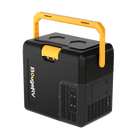
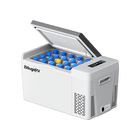
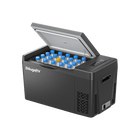
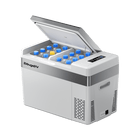
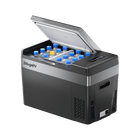
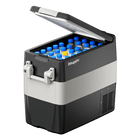
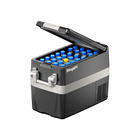
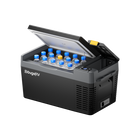
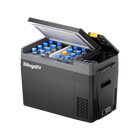
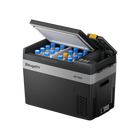
Let’s look at two examples based on the BougeRV CR Series 30QT, a popular and efficient 12V camper fridge.
Example A: ECO Mode
Running wattage: 36W while the compressor is on.
Average duty cycle: 30% (compressor runs ~7.2 hours/day).
Daily energy use: 36W × 0.30 × 24 hours = 0.2352 kWh/day.
Annual energy use: 0.2352 × 365 = 85.85 kWh/year.
Annual cost: At $0.1721/kWh (average U.S. rate), ~$14.77/year (~$1.23/month).
Example B: MAX Mode
Running wattage: 45W while the compressor is on.
Average runtime: ~8 hours/day.
Daily energy use: 45W ÷ 1000 × 8 hours = 0.36 kWh/day.
Annual energy use: 0.36 × 365 = 131.4 kWh/year.
Annual cost: At $0.1721/kWh, ~ $22.61/year (~$1.88/month).
Takeaway: Even in MAX mode, efficient 12V camper fridges like these are incredibly cost-effective to run, making them a smart choice for both home and off-grid use.
Factors That Affect Mini Fridge Electricity Usage
Several factors influence how much electricity your mini fridge uses:
-
Size and Capacity: Larger fridges require more energy to cool their interior space.
-
Compressor Efficiency: Newer designs with advanced refrigerants and better insulation are far more efficient than older or cheaper models.
-
Ambient Temperature: A fridge in a cool, ventilated space will use less energy than one in a hot garage or under direct sunlight.
-
Door Usage and Stocking Levels: Frequent door openings or an almost-empty fridge force the compressor to work harder. A moderately stocked fridge is more energy-efficient.
-
Off-Grid Usage (12V Operation): Conversion losses, inverter inefficiency, and poor insulation in mobile environments can increase energy draw when using a mini fridge in an RV or camper.
Camper & Van Life: Best Practices for Electric Fridges
For RV owners, van lifers, and off-grid adventurers, an efficient mini fridge is as essential as a reliable battery or solar panel setup. Here’s why BougeRV mini fridges stand out for mobile lifestyles:
1. Low Electricity Consumption
BougeRV fridges use energy-efficient compressor technology, designed to cool quickly and cycle efficiently. Features like ECO mode further reduce power draw, making them ideal for off-grid living.
2. Perfect for Mobile Use

Designed with campers and RVs in mind, BougeRV fridges offer:
-
12V/24V DC compatibility for direct connection to vehicle batteries.
-
Optional AC support for seamless switching between home and travel.
-
Vibration-resistant construction for stable performance on the go.
3. Reliable Cooling in Real-World Conditions

BougeRV fridges excel in challenging environments:
-
Strong insulation minimizes heat transfer, reducing energy use.
-
Consistent internal temperatures protect food and drinks.
-
Fast cool-down times save energy during startup.
4. Multiple Sizes for Different Needs
From compact single-zone models for snacks to larger dual-zone options for simultaneous refrigeration and freezing, BougeRV offers a larger capacity portable fridge for longer trips.

5. Built to Last
Energy efficiency isn’t just about low wattage—it’s also about durability. BougeRV fridges are built with long-lasting compressors, rugged exteriors for travel, and features like digital temperature controls and battery protection to ensure years of reliable performance.
Final Thoughts: Do Mini Fridges Use a Lot of Electricity?
For most modern mini fridges, the answer is no, especially when you choose the right model and use it efficiently. A well-designed mini fridge typically costs just a few dollars per month to operate, thanks to advancements in compressor technology and insulation.
For campers, RV owners, and van lifers, the question of energy use becomes even more crucial. Off-grid power is limited, and every watt counts. That’s why 12V compressor fridges, like those from BougeRV, are a game-changer. They keep food fresh and drinks cold without draining batteries or requiring oversized solar setups.
So, whether you’re outfitting a dorm room, upgrading your camper, or just curious about energy costs, rest assured: a thoughtfully chosen mini fridge won’t break the bank, or your power supply.


