 Skip to content










































What Is A Good Efficiency For A Solar Panel?

If you’re exploring solar panels for your home or simply curious about how much electricity your rooftop can realistically generate, “efficiency” is one of the first terms you’ll encounter. But what does solar panel efficiency truly mean? What’s considered “good” in today’s market? And how does efficiency evolve over time? These are important questions when evaluating your solar investment.
Let's learn more about what solar panel efficiency means, what qualifies as “good” efficiency today, how advancements in technology are driving improvements, and how you can maximize the energy output of your solar panels. Plus, we’ll highlight our BougeRV solar panels as a reliable option for those looking to compare high-performing products.
What is Solar Panel “Efficiency”?
Solar panel efficiency refers to the percentage of sunlight a panel converts into usable electrical energy under standard test conditions. These conditions assume:
-
Solar irradiance: 1,000 watts per square meter (the intensity of sunlight at midday).
-
Temperature: 77°F (25°C).
For example, if a solar panel has an efficiency of 20%, it converts 20% of the sunlight it receives into electricity. That means it would produce 200 watts of power for every square meter of sunlight.
Let’s break this calculation down step by step:
-
Solar irradiance: 1,000W/m².
-
Efficiency: 20% = 0.20.
-
Power output per square meter: 1,000 × 0.20 = 200W/m².
-
For a 1.7 m² panel, the output would be: 200 × 1.7 = 340W.
In short, higher efficiency means more power generated from the same roof space, which is especially valuable when space is limited.
What Is Considered “Good” Solar Panel Efficiency Today?
There’s no single “perfect” efficiency number—it depends on your priorities, like cost, space, or long-term energy production. However, here are some practical benchmarks for residential and commercial solar panels:
-
Entry-Level to Mid-Range Panels (17%–20%)
These panels are budget-friendly and widely available, offering solid performance for most homeowners. -
Mid-to-High Efficiency Panels (20%–22.5%)
A popular choice for homeowners seeking a balance between price, performance, and warranty coverage. -
High-Efficiency Panels (23%–25%+)
These panels use advanced technologies like TOPCon, HJT, and n-type silicon to deliver maximum power per square meter. They’re ideal for homes with limited roof space or for commercial projects requiring high energy output. -
Cutting-Edge Technologies (25%–30%+)
Laboratory-developed tandem cells (e.g., silicon + perovskite) have achieved efficiencies above 30% in research settings. While not yet widely available, these innovations signal the future of solar technology. -
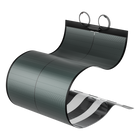
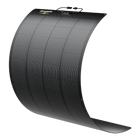
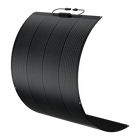
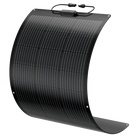
Thin-Film & Flexible Solar Panels (12%–20%)
Although less efficient per square meter, thin-film panels offer unique advantages like flexibility, lightweight design, and better performance in shaded or curved areas. They’re great for RVs, boats, and other specialized applications.
Pro Tip: If you have limited roof space, aim for panels with at least 22% efficiency. If space isn’t an issue, panels in the 18%–20% range often provide excellent value for money.
Why Solar Panel Efficiency Is Improving
Solar panel efficiency has steadily increased over the years thanks to advancements in cell design, manufacturing, and system optimization. Here’s a closer look at some of the key innovations:
-
Cell Architecture: Technologies like PERC (Passivated Emitter Rear Cell), TOPCon (Tunnel Oxide Passivated Contact), and HJT (Heterojunction) have improved how solar cells capture and convert sunlight. These innovations also reduce long-term degradation.
-
Tandem Cells: By layering materials like silicon and perovskite, tandem cells capture more of the solar spectrum, enabling record-breaking efficiencies in lab settings. While still in development for commercial use, tandem cells represent the next leap in solar technology.
-
System Design Enhancements: Improvements like bifacial modules (which capture sunlight from both sides), anti-reflective coatings, and single-axis trackers have boosted system-level efficiency, increasing the energy produced per installed watt.

How Solar Panel Efficiency Changes Over Time
Solar panels don’t maintain their peak efficiency forever. Over time, they degrade, producing slightly less energy each year. Here’s what you need to know:
-
Average Degradation: Most panels degrade at a rate of 0.3%–0.8% per year, depending on the manufacturer and technology. First-year degradation is often slightly higher.
-
Real-World Example: A panel with 0.5% annual degradation will produce about 88% of its original output after 25 years. (Calculation: (1 − 0.005)^25 ≈ 0.88).
When choosing panels, check the manufacturer’s degradation rate and warranty to understand long-term performance.
Factors That Reduce Real-World Efficiency
Even the most efficient solar panels rarely operate at their peak efficiency in real-world conditions. Common factors that reduce output include:
-
High Temperatures: Heat reduces panel efficiency (measured by the temperature coefficient).
-
Dirt and Debris: Dust, leaves, snow, and bird droppings block sunlight.
-
Shading: Nearby trees or buildings can cast shadows that lower production.
-
Wiring and Inverter Losses: Energy is lost during transmission and conversion.
-
Suboptimal Angle or Orientation: Panels not perfectly aligned with the sun produce less energy.
How to Maximize Solar Panel Efficiency
To get the most out of your solar system, consider these tips:
-
Choose the Right Panels: For limited roof space, opt for high-efficiency monocrystalline or advanced n-type panels like TOPCon or HJT. For RVs or curved surfaces, consider flexible thin-film panels.
-
Use Bifacial Panels: These capture sunlight from both sides, increasing energy yield when installed over reflective surfaces.
-
Invest in MPPT charge controllers / pure sine wave inverters: Maximum Power Point Tracking (MPPT) controllers optimize energy production under varying conditions.
-
Ensure Proper Ventilation: Elevated panels allow air to flow underneath, reducing heat buildup and improving efficiency.
-
Maintain Clean Panels: Regularly clean panels to remove dirt, debris, and snow. Trim any overhanging branches that cast shade.
-
Optimize Tilt and Orientation: Adjust panel angles seasonally or invest in tracking systems to maximize sunlight exposure.
Measuring Value Beyond Efficiency
Efficiency isn’t the only factor to consider when choosing solar panels. Other important metrics include:
-
Cost-per-Watt ($/W): Lower-efficiency panels may be more cost-effective if you have ample roof space.
-
Energy-per-Square-Meter: High-efficiency panels are worth the premium when space is limited.
-
Durability and Warranty: A cheaper panel with faster degradation may cost more over its lifetime.
Why Choose BougeRV Solar Panels?
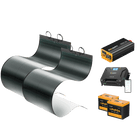
BougeRV solar panels are designed for real-world performance, offering a dependable balance of efficiency, durability, and versatility. Whether you’re powering your home, RV, or boat, BougeRV panels deliver reliable energy in any condition.
Key Benefits of BougeRV Panels:
-
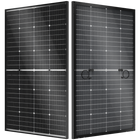
High Efficiency: Select models like the BougeRV 16BB N-Type 200W Bifacial Solar Panel that reach up to 25% efficiency, maximizing power in limited spaces.
-
Durability: Rugged construction ensures long-term performance, even in outdoor environments.
-
Low-Light Performance: Optimized cells maintain strong output on cloudy days.
-
Versatility: Available in both rigid and flexible designs, ideal for a variety of applications.

Final Thoughts
So, what is a good efficiency for a solar panel? For most users, anything around 20% or higher is an excellent choice. Panels with 22%+ efficiency are ideal for maximizing energy in limited spaces, while slightly lower-efficiency panels can still offer great value for larger installations.
Remember, the best solar panel isn’t just the one with the highest efficiency—it’s the one that aligns with your space, budget, and energy needs. By understanding efficiency, degradation, and real-world performance, you can make an informed decision and enjoy clean, renewable energy for decades to come.
Ready to start your solar journey? Check out BougeRV’s high-quality solar panels today!


