 Skip to content





































How to Cool a Tent in Hot Summer: 7 Ways to Actually Sleep Through the Heat

Anyone who's tried to nap in a tent at 2 p.m. in July knows the real problem: tents trap heat and won't let it go. Nylon and polyester block wind and rain well, but they're poor at releasing the heat that builds up once the sun hits them. By midafternoon, the inside of a tent can run 20-30°F hotter than the air outside.
Cooling a tent down comes down to three things: where the sun hits, how air moves through the space, and how much heat you're adding from gear and bodies. Get those right, and even a budget dome tent stays livable through a heatwave. Here's what works, from free fixes to the gear worth packing if you camp regularly through summer.
Pitch in the shade — and track where the sun will move
Direct sun exposure is the biggest factor in tent temperature, so where you pitch matters more than anything else here. Look for shade from trees, rock faces, or a vehicle, and remember the sun shifts through the day — a spot shaded at 10 a.m. might be in full sun by 2 p.m.
No natural shade? Bring your own. Pitch a tarp a foot or two above the tent, without touching it, to create an air gap that blocks direct sun while letting heat escape upward instead of soaking into the fabric. This alone can knock several degrees off the interior.
Where possible, face the door away from the afternoon sun and toward any prevailing breeze, so you get airflow without heat blasting straight through the entrance.
Open every vent and door you have
Most three-season tents have mesh panels and vents for exactly this reason, yet it's surprising how often they stay zipped up out of habit. Open the rainfly vents, both doors if you have them, and any window covers. Cross-ventilation — air entering one side and exiting the other — actually moves stagnant air out, rather than just trapping it indoors.
If your tent only has one door, prop it open as wide as the bug screen allows, and angle the tent so wind crosses the opening rather than hitting a dead-end corner.
Use a portable fan to keep air actually moving

Shade and ventilation get you partway there, but on still, humid days, there's often no breeze to work with — that's where a battery-powered camping fan for tent does the job the wind isn't doing for you.
The BougeRV F01 Portable Fan is built for exactly this. It runs on a 20,000mAh battery, delivering airflow up to 5.4 m/s and up to 33.5 hours of runtime on a single charge — enough for an entire weekend without an outlet. It rotates 270° and hooks onto a tent loop or ridge pole, so you can hang it overhead and circulate air across the whole tent rather than just blowing on whoever's closest. App control with timer settings and a warm LED light round it out.
If you're cooling more than a sleeping tent — a screened canopy, group campsite, or awning area — the BougeRV F02 Outdoor Fan is the better fit. It runs on a removable 144Wh battery good for 8 to 72 hours, or plugs into AC power near an outlet. With airflow rated at 755 CFM and up to 7.4 m/s, it's closer to a jobsite fan than a desk fan — built for an open camp area rather than a single tent interior.
Many campers pair the two: the F01 inside the sleeping tent for quiet overnight airflow, the F02 at the communal area for everyone else.
Choose light-colored, reflective gear
Dark tents absorb heat; light-colored ones reflect it. If you're shopping for a tent with summer camping in mind, a tan, white, or light gray rainfly will run noticeably cooler in direct sun than a dark green or black one. Stuck with a darker tent? A reflective tarp or emergency blanket draped over the top — again, with an air gap — works as an improvised heat shield.
The same logic applies underneath you. A reflective groundsheet helps block heat radiating up from sun-baked dirt or rock, an often-overlooked source of tent heat.
Cut down on heat sources inside the tent
Every piece of gear you bring in generates or traps heat — battery packs, electronics, even your own body heat add up fast in a small enclosed space. Keep gear you don't need overnight in a vestibule rather than piled inside the sleeping area. Swap heavy sleeping bags for a lightweight summer-rated sheet or quilt, and skip the inflatable mattress if a thin sleeping pad will do — air mattresses trap noticeably more heat than thinner pads.
When it's truly brutal, bring a portable air conditioner

Fans and ventilation take the edge off, but during a genuine heatwave — especially somewhere humid, where sweat won't evaporate fast enough to cool you — there's a ceiling to what airflow alone can do. A dedicated portable AC for tent changes the experience rather than just managing it.
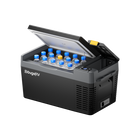
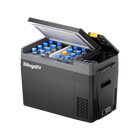
The BougeRV PC35 Portable Air Conditioner is built for exactly this. It delivers 3,500 BTU of cooling power and can drop the temperature by 18°F in 15 minutes on strong mode, suited for spaces up to about 64.58 square feet — roughly a two-person tent. The adjustable range runs from 61°F to 90°F, and it operates from the control panel, the included remote, or the BougeRV app. At a measured 55 decibels, it's quiet enough to run overnight.
For van life, truck cab, or RV use, the BougeRV PC35 PRO is worth a look. It shares the same 3,500 BTU output, IPX5 waterproof rating, and R290 refrigerant as the standard PC35, but upgrades to a variable-speed inverter compressor for smoother, quieter cycling — bringing noise down to roughly 50 decibels.
One thing worth knowing before you buy: a compressor-based AC needs somewhere for the hot exhaust to go. It has to be vented outside the space being cooled — through a vent port, a partially open door, or a purpose-built AC sleeve — or the unit loses efficiency and risks overheating. It also needs real power behind it; if you're running it off a portable power station, check that station's continuous output rating (not just peak), since many cheaper power banks overstate what they can actually sustain. (Use the discount code "SEOBF" at checkout to enjoy an extra 6% off!)
Time your activities around the heat, not against it
This one's free and easy to forget. The tent will always be hottest between roughly noon and 4 p.m., so plan around it — hike, swim, or explore during that window, and save tent time for cooler mornings and evenings. If you have access to shade structures, set up a separate hangout area away from the tent for the worst of the afternoon, and only head back once the sun has dropped and the fabric has had a chance to cool.
Putting it together
No single trick solves tent heat on its own — shade, ventilation, and smart gear choices each chip away at the problem, and together they make a real difference. For mild heat, a good pitch location plus open vents and a fan like the F01 will usually get you through the night comfortably. For serious heatwaves, sticky humidity, or anyone who camps through summer regularly, adding a portable AC like the PC35 or PC35 PRO turns a miserable night into a genuinely good one.
The best approach is layered: start with free fixes like shade and orientation, add airflow with a fan, and bring in active cooling when the forecast calls for it. That way, you're never carrying more gear than the trip needs — but you're never stuck sweating through the night either.


