 Skip to content



















































How Many Solar Panels Can I Connect in Series?

If you've ever stared at a pile of solar panels and wondered, "Do I wire these in series, parallel, or some combination?"—you're not alone. It's one of the most-searched solar questions out there, and for good reason: wiring it wrong can fry your charge controller, kill your output, or void your warranty.
The short answer is that the number of panels you can connect in series depends on your charge controller's maximum input voltage, not on some fixed industry number. But that one-line answer leaves out a lot of nuance, so let's break it down properly.
Series vs. Parallel: A 30-Second Refresher
Before diving into limits, it helps to remember the basic rule of electricity:
- Series wiring adds the voltages (Voc) together while the current (Amps) stays the same.
-
Parallel wiring adds current together while voltage stays the same.
So if you connect two 100W panels (18V, 5.5A each) in series, you get 36V at 5.5A. Wire them in parallel instead, and you get 18V at 11A. Same total wattage, very different electrical profile—and that profile is what determines compatibility with the rest of your system.
How Many Panels Can You Actually Put in Series?
This comes down to three numbers you need to check before connecting anything:
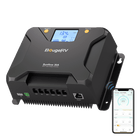
1. Your charge controller's maximum input voltage. Most 12V/24V MPPT controllers cap out around 100V–150V open-circuit voltage (Voc). Higher-end units used in larger off-grid or home setups can handle up to 500V on grid-tie inverters.
2. The Voc of each panel. This is printed on the panel's spec sticker—not the operating voltage (Vmp), but the open-circuit voltage, which is what the panel produces in cold, sunlight-only conditions before any load is connected. This is the number your controller actually has to survive.
3. A cold-weather safety margin. Voc rises in cold temperatures. If you're calculating right at your controller's limit, a frosty morning could push you over and trip (or damage) the controller. Most installers build in a 10–20% buffer.
A simple example: If your panels have a Voc of 23V and your MPPT controller's max input is 100V, you could theoretically string four panels in series (23V × 4 = 92V) and stay safely under the limit with room for cold-weather spikes. A fifth panel would push you to 115V—over the limit.
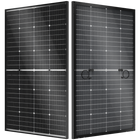
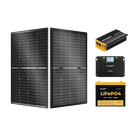
This is exactly why BougeRV TOPCon solar panels list clear voltage specs for each model, whether you're working with a 100W panel for a small RV setup or stacking 400W panels for a cabin system. Knowing your panel's Voc up front saves you from doing this math after something's already smoking.

Common Solar Wiring Questions, Answered
Can I mix different brands of solar panels?
Technically, yes, but it's risky. Different brands can have slightly different Voc, Vmp, and current outputs even at the same wattage rating. In series, the string is limited by the weakest panel's current, so mismatched panels reduce your overall output. In parallel, voltage mismatches are the bigger concern. If you must mix brands, keep them in separate strings or use a charge controller with multiple independent inputs rather than wiring dissimilar panels into the same string.
Can I mix monocrystalline and polycrystalline panels?
You can, but it's not ideal. Monocrystalline panels (like BougeRV's higher-efficiency TOPCon N-Type panels) typically have different voltage and temperature coefficients than older polycrystalline panels. Mixing them in series means the lower-performing poly panel becomes the bottleneck for the whole string. If you're upgrading an old poly system, it's usually smarter to run the new mono panels as a separate string into a second controller input.
Can I connect solar panels with different voltages together?
In series, no—this is one of the most common mistakes. Series wiring assumes each panel contributes equally to the current flow, and a voltage mismatch creates an imbalance that reduces the total output and can stress the lower-voltage panel. In parallel, slight voltage differences are more forgiving since each panel operates more independently, but for best results, panels should still be reasonably matched.
Can I mix old and new solar panels in the same system?
This is a frequent question for homeowners and RV owners expanding an existing array. Older panels degrade over time (typically 0.5–1% efficiency loss per year), so a 5-year-old panel won't perform identically to a brand-new one. Mixing them in series means the older, weaker panel limits the current of the whole string. The safer approach: keep old and new panels on separate strings, or run them into separate MPPT inputs if your controller supports it.
Can I use panels with different wattages in series vs. parallel?
Yes, with caveats. In series, what matters is matching current (Amps), not wattage—panels with the same current rating but different voltages can often be combined, though it's not the most efficient setup. In parallel, what matters is matching voltage—panels with similar voltage but different wattage/current ratings combine more gracefully. This is actually one of the more flexible scenarios, which is why many off-grid users running a mixed solar panel setup wire them in parallel rather than in series.
Can I add more solar panels to an existing system?
Absolutely—this is one of the biggest trends in solar right now, especially among RV and off-grid users who started small and are scaling up. Before adding panels, check three things: (1) your charge controller's remaining voltage/current headroom, (2) whether your battery bank can absorb the extra charge rate, and (3) whether your existing wiring and fuses are rated for the new combined current. If you're near your controller's limit, adding panels via a second string into a separate controller input (rather than extending the same series string) is usually the cleaner fix—it also means a shading or failure issue on one string doesn't take down your whole array.
Why This Matters More in 2026
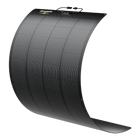
Solar adoption among RV owners, van-lifers, and home backup users has exploded over the past few years, and a lot of that growth is DIY-driven. People aren't just buying a single panel anymore—they're building expandable systems, adding panels seasonally, or combining flexible and rigid panels for hybrid setups (rigid for the roof, portable for shaded angles). That's pushed "can I mix X with Y" questions to the top of solar search trends, because manufacturers' spec sheets don't always spell out compatibility in plain language.
It's also why anti-shading and bifacial panel technologies have gained traction—features found in panels like BougeRV's ShadePower series help reduce the performance gap between panels in partial shade, which matters a lot when you're stringing multiple panels together and one corner of your roof gets shaded in the afternoon.
The Bottom Line
There's no universal "you can connect 4 panels" or "6 panels" rule—it's entirely dependent on your charge controller's voltage ceiling, your panels' Voc rating, and a sensible cold-weather buffer. When in doubt:
- Match panels within a series string (same voltage, current, and ideally the same model)
- Use separate strings or controller inputs for mismatched or older panels
- Always check Voc at cold temperatures, not just the "typical" rated voltage
- Leave headroom—don't wire right up to your controller's max rating
If you're shopping for panels that make this math easier from the start, BougeRV solar panel collection lists clear voltage and current specs across its rigid, flexible, and portable lines, so you can plan a series or parallel string with confidence before you ever pick up a wrench. Use the discount code "SEOBF" at checkout to enjoy an extra 6% off for your solar power.


